Core Program QIS Research
Office of Science (SC) supports core program QIS research that drives revolutionary new ideas and cutting-edge R&D with the potential to advance American industry. Where industry is focused on specific platforms and near-term technology roadmaps, DOE’s core programmatic activities go beyond the current paradigm to explore entirely new opportunity spaces. Recognizing that DOE is uniquely positioned to cover a wide range of QIS activities, each program has identified their unique areas of interest in QIS:
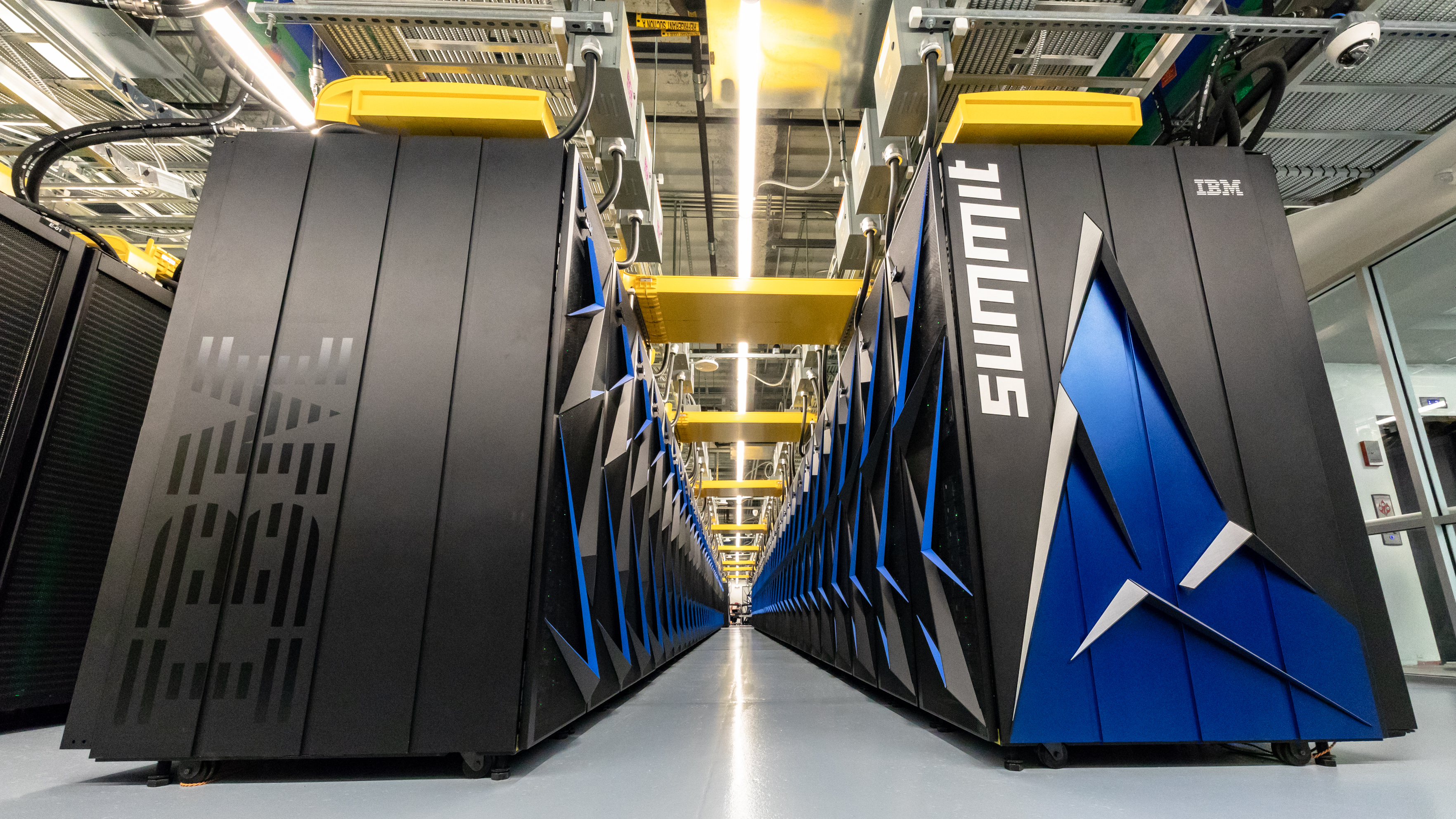
| Advanced Scientific Computing Research (ASCR) supports basic research in applied mathematics, computer science, networking, and hardware to integrate classical and quantum technologies, focusing on developing end-to-end software across all levels of the software stack, compilation, algorithm development, and capabilities for the convergence of HPC, AI, and QIS. Read More |
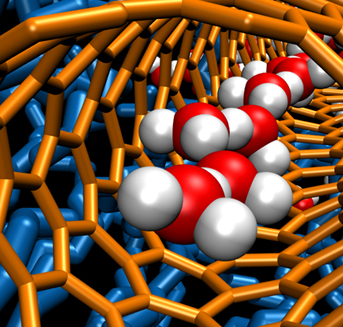
| Basic Energy Sciences (BES) supports research and infrastructure to develop a fundamental understanding of chemical and materials systems in order to create, control, and utilize quantum information to enable groundbreaking discoveries in science and energy applications. Read More |
 |
Biological and Environmental Research (BER) supports quantum applications in bioimaging, sensing, and measurement. Research areas include quantum-enabled molecular and environmental sensors, single photon detectors, and quantum light sources from infrared to X-ray; to provide new technologies for fundamental biological research and innovations in biotechnology. Read More |
|
General Plasma Science Composite
 |
Fusion Energy Sciences (FES) supports the development of quantum computing concepts to address inherently nonlinear plasma dynamics and fusion challenges; the implementation of plasma-relevant quantum algorithms on current and emerging quantum hardware platforms; the identification of quantum sensing techniques to enhance diagnostic capabilities in plasma science and fusion applications; and the application of plasma-based methods—including high energy density plasmas (HEDP) and low-temperature plasmas (LTP)—to develop and control novel quantum materials for QIS applications. Read More |
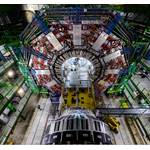
| High Energy Physics (HEP) supports QIS-enabled discovery for the HEP mission, using the tools, techniques, and concepts of QIS to solve previously intractable problems, measure previously undetectable signals, and bring new theoretical tools to bear on our understanding of the universe. HEP research includes foundational QIS, intersections of QIS with quantum field theory, the development of new quantum sensors, quantum simulation and computing applications, and integration of QIS into pathfinder experiments. Read More |
| Isotope R&D and Production (IRP) produces and distributes isotopes critical for QIS and supports R&D on novel and improved isotope production capabilities to ensure a secure, domestic supply of isotopes that are of vital importance to the Nation’s QIS efforts. Read More |
| Nuclear Physics (NP) supports fundamental research and innovation at the nuclear physics and QIS interface, leveraging the distinct strengths of each field. Research combines novel theory, hybrid computing architectures, and understanding of nuclear phenomena to advance QIS. Major emphases include next-generation quantum sensors for physics facilities, mitigation of the impact of radioactivity on qubits, and development of highly precise nuclear clocks. Read More |