



Community Resources
What's New
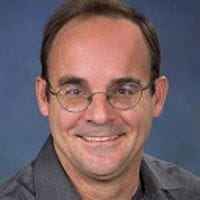 2026 Hans A. Bethe Prize recipient
The Bethe prize was established by the American Physical Society (APS) to recognize outstanding work in theory, experiment or observation in the areas of astrophysics, nuclear physics, nuclear astrophysics, or closely related fields.
The recipient of the 2025 Bethe Prize is Dr. Chris Fryer from Los Alamos National Laboratory. The citation from the APS reads
“For broad and pioneering contributions to our understanding of stellar collapse, supernovae, and compact object formation, and for leadership in the field of time-domain multi-messenger nuclear astrophysics.”
Dr. Fryer’s research is supported by the DOE’s Office of Science, Office of Nuclear Physics.
Further information is available at Hans A. Bethe Prize | American Physical Society
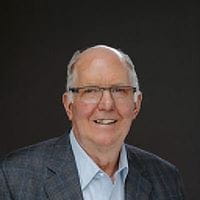 2026 Tom W. Bonner Prize in Nuclear Physics recipient
The Bonner prize was established by the APS to recognize and encourage experimental research in nuclear physics, including the development of a method, technique, or device that significantly contributes to nuclear physics research. The prize was endowed in 1964 as a memorial to Tom W. Bonner by his friends, students and associates.
The recipient of the 2026 Bonner Prize is Dr. Christopher L. Morris from Los Alamos National Laboratory. The citation from the APS reads
“For pioneering work to develop an ultracold neutron source and establish ultracold-neutron-based physics research in the U.S., and for leadership in measuring the free neutron lifetime to unprecedented precision using a magneto-gravitational trap and in-situ detection of neutrons.”
Dr. Morris’ research is supported by the DOE’s Office of Science, Office of Nuclear Physics.
Further information is available at Bonner Prize in Nuclear Physics | American Physical Society
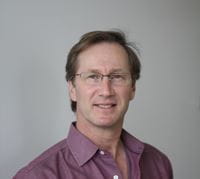 2026 Herman Feshbach Prize in Theoretical Nuclear Physics
The Herman Feshbach Prize in Theoretical Nuclear Physics was established in 2014 by the APS to recognize and encourage experimental research in theoretical nuclear physics. The Prize commemorates Herman Feshbach, who was a renowned Professor of Theoretical Nuclear Physics at the Massachusetts Institute of Technology (MIT) for over 50 years and served as Department Chair and Director of the MIT Center for Theoretical Physics. The Herman Feshbach Prize is supported by the APS Division of Nuclear Physics (DNP), Brookhaven Science Associates, Elsevier, Lawrence Livermore National Laboratory, Los Alamos National Laboratory, Massachusetts Institute of Technology, Michigan State University, University of Tennessee, Southeastern Universities Research Association, the Lourie Foundation and by the Feshbach family and friends.
The recipient of the 2026 Herman Feshbach Prize is Professor Martin J. Savage from the University of Washington. The citation from the APS reads
“For pioneering contributions to computational quantum chromodynamics for nuclear physics, especially through large-scale lattice quantum chromodynamics simulations, and for exploring applications of quantum computing.”
Professor Savage’s research is supported by the DOE’s Office of Science, Office of Nuclear Physics.
Further information is available at Feshbach Prize Theoretical Nuclear Physics | American Physical Society
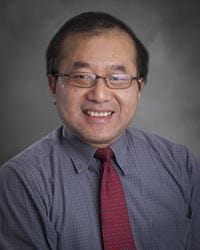 2026 Robert R. Wilson Prize for Achievement in the Physics of Particle Accelerators
The Robert R. Wilson Prize recognizes and encourages outstanding achievement in the physics of particle accelerators. The prize was established in 1986 by friends of Robert R. Wilson, the Division of Particles and Fields, and the Division of Physics of Beams.
The recipient of the 2026 Robert R. Wilson prize is Dr. Jie Wei from Michigan State University. The citation from the APS reads
“For seminal contributions in the physics of high-intensity hadron accelerators, and for leadership in the development, construction, and commissioning of the world's highest power hadron accelerators, particularly the first continuous-wave superconducting linac for heavy ions above 200 MeV/nucleon.”
Dr. Wei is the director of the Facility for Rare Isotope Beams’ (FRIB) Accelerator Systems Division and professor of physics at FRIB and in MSU’s Department of Physics and Astronomy. FRIB is a DOE Office of Science, Office of Nuclear Physics scientific user facility.
Further information is available at Wilson Prize for Particle Accelerators | American Physical Society


