An official website of the United States government

Here’s how you know

Official websites use .gov
A .gov website belongs to an official government organization in the United States.

Secure .gov websites use HTTPS
A lock ( Lock Locked padlock icon ) or https:// means you’ve safely connected to the .gov website. Share sensitive information only on official, secure websites.

Skip to content
U.S. Department of Energy Office of Science The United States Department of Energy seal next to blue text: " U.S. Department of Energy" a horizontal yellow line seperates additional text that reads " Office of Science"

Main Navigation

  • Home
  • About
    • Organization
    • Budget
    • Field Operations
    • Federal Advisory Committees
    • President’s Council of Advisors on Science and Technology (PCAST)
    • STI
    • History
    • Honors & Awards
    • Jobs
    • Brochures, Logos, & Information Resources
    • Contact
  • Laboratories
    • Ames National Laboratory
    • Argonne National Laboratory
    • Brookhaven National Laboratory
    • Fermi National Accelerator Laboratory
    • Lawrence Berkeley National Laboratory
    • Oak Ridge National Laboratory
    • Pacific Northwest National Laboratory
    • Princeton Plasma Physics Laboratory
    • SLAC National Accelerator Laboratory
    • Thomas Jefferson National Accelerator Facility
    • Safety and Security Policy
    • Laboratory Policy
    • Operations Program Management
    • Acquisition Management
  • Science Features
    • Science Highlights
    • News Archive
  • Universities
    • Interactive Grants Map
    • SC In Your State
  • User Facilities
    • User Facilities at a Glance
    • User Resources
    • User Statistics
    • Policies and Processes
    • Frequently Asked Questions
  • Funding
    • Office of Sponsored Activities
    • Topical Funding Opportunity Awards
    • Award Search / Public Abstracts
    • Find Funding
    • Early Career Research Program
    • Digital Research Data Management
    • Acknowledgements of Federal Support
  • Initiatives
    • Artificial Intelligence for Science
    • Biopreparedness Research Virtual Environment (BRaVE)
    • Data Resources (PuRe Data)
    • Microelectronics
    • National Virtual Biotechnology Laboratory (NVBL)
    • Quantum Information Science (QIS)
  • Programs
    • Advanced Scientific Computing Research
    • Basic Energy Sciences
    • Biological and Environmental Research
    • Fusion Energy Sciences
    • High Energy Physics
    • Nuclear Physics
    • Project Assessment
    • Workforce Development for Teachers and Scientists
    • Small Business Innovation Research and Small Business Technology Transfer
    • Isotope R&D and Production (IP)

Utility Navigation

  • SC Home
  • Organization
  • Contact
  • Stay Connected
  • DOE Home

Breadcrumb Navigation

  • Home
  • Programs
  • Advanced Scientific Computing Research (ASCR)
  • Community Resources
  • ASCR Presentations

ASCR Presentations

SciDAC Futures
August 2011
 
ASCR 2012 Budget Request to Congress
March 2011
 
The Challenge of Exascale and Exabyte
February 2011
 
Data Transfer and Storage
October 2010
 
 
Additional presentations are available in the ASCR Program Documents and the ASCR Advisory Committee Reportsweb pages

Advanced Scientific Computing Research (ASCR) Navigation

  • About
  • Research
  • Facilities
  • Science Highlights
  • Benefits of ASCR
  • Funding Opportunities
  • Computational Science Graduate Fellowship (CSGF)
  • Community Resources
    • ASCR Discovery
    • ASCR Program Documents
    • ASCR Workshops and Conferences
    • ASCR Presentations
    • 100Gbps Science Network
    • Related Links
  • (ARCHIVE) Advanced Scientific Computing Advisory Committee (ASCAC)
  • Office Hours

Highlights

View all Highlights
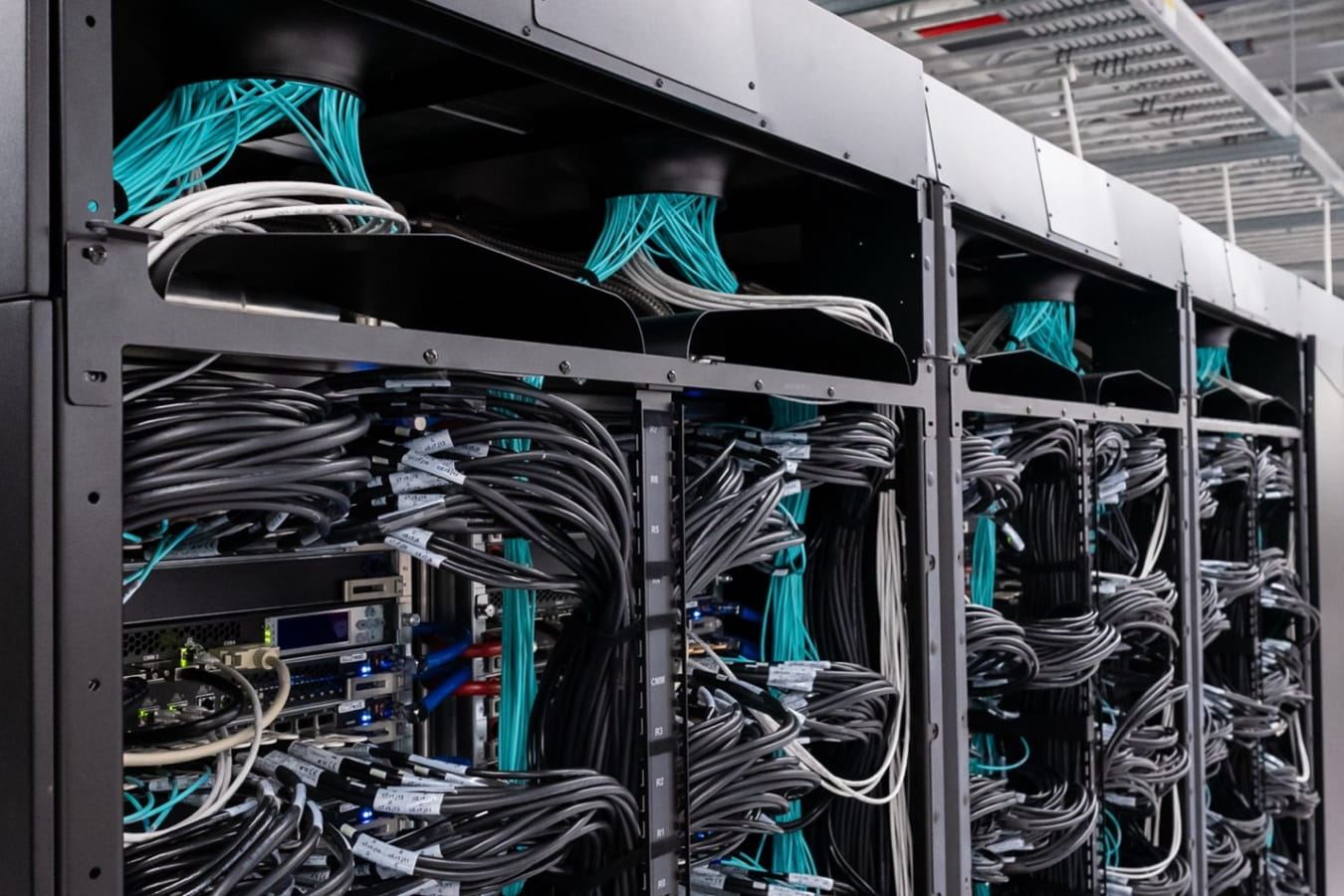
ORNL’s Frontier supercomputer earned the top ranking on the TOP500 list in June 2022, marking it as the world’s fastest computer at the time with 1.1 exaflops of performance.

Improving Computing Memory Performance for Scientific Discovery

A new framework employs usage patterns to improve data placement.

(a) Fiber spools used for realizing a telescoping suite of fiber connections. (b) entanglement throughput measurements and corresponding capacity estimates by light measurements on a Polatis all-optical switch and at the source and detector.

Scientists Compare Throughput for Quantum vs. Conventional Networks

A comparison of throughput measurements and analytical capacity estimates for quantum networks finds surprising patterns.

Contact Advanced Scientific Computing Research

Address U.S. Department of Energy
SC-31/Germantown Building
1000 Independence Ave., SW
Washington, DC 20585
Phone Tel (301) 903-7486
Fax(301) 903-4846
Email Send us a message sc.ascr@science.doe.gov
Read more about
Join Mailing List

Signup for the Office of Science’s GovDelivery email service, and check the box for the Advanced Scientific Computing Research Program in your subscriber preferences.

Subscribe

Top
The United States Department of Energy seal in white next to white text that reads: " U.S. Department of Energy" a horizontal white line seperates additional text that reads " Office of Science"

Footer Main Navigation

SC Home
Contact
FOIA Requests
Web Policies
Site Map

Contact Information

Footer Secondary Navigation

About Energy.gov Web Policies Privacy No Fear Act Whistleblower Protection Vulnerability Disclosure Program Information Quality Open Gov Accessibility Stay Connected
Energy Department Careers & Internships Budget & Performance Directives, Delegations & Requirements FOIA Inspector General Privacy Program Small Business SBIR/STTR Programs
Federal Government The White House USA.gov

Leaving Office of Science

The link you have requested will take you to a website outside the Office of Science.


Please click the following link to continue:


Thank you for visiting our site. We hope your visit was informative and enjoyable.

Department of Energy Office of Science Home
sub nav
background Layer 1