



Ceremony
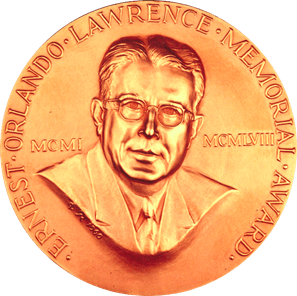
2026 Ceremony
The Awards Ceremony honoring the 2026 Ernest O. Lawrence Award Laureates was held on Friday, November 13, 2026, in the Large Auditorium of the DOE James V. Forrestal Building in Washington, DC.
The ceremony program is available here.
A recording of the ceremony proceedings is available here.
The Ernest O. Lawrence Awards are Secretarial awards, recognizing mid-career U.S. scientists and engineers for exceptional scientific, technical, and engineering achievements related to the broad missions of the U.S. Department of Energy and its programs. The awards are among the longest running and most prestigious science and technology awards bestowed by the U.S. Government.
Energy Secretary Chris Wright announced nine U.S. scientists and engineers as recipients of the prestigious Ernest Orlando Lawrence Award for 2026.
The 2026 Ernest O. Lawrence Award recipients are:
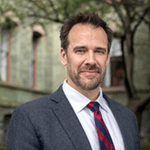
Eric J. Schelter, Ph.D. (University of Pennsylvania) - Atomic, Molecular, and Chemical Sciences -
Honored for his “fundamental chemical studies of energy-critical metals leading to new methods for their selective and sustainable separations.”

Patrick Chain, Ph.D. (Los Alamos National Laboratory and New Mexico Consortium) - Biological and Environmental Sciences -
Honored for his “pioneering work in in genomics and microbiome science, including discoveries of new bacterial-fungal interactions and revolutionizing the field by democratizing access to advanced bioinformatics tools.”

Samuel W. Williams, Ph.D. (Lawrence Berkeley National Laboratory) - Computer, Information, and Knowledge Sciences -
Honored for his “pioneering contributions in performance modeling, hardware/software design optimization, and novel computer architecture for high performance computing, enabling modeling of complex computational solutions, and increasing analysis speed, simulation accuracy, and computational efficiency.”

Thomas Epps, III, Ph.D. (University of Delaware) - Condensed Matter and Materials Sciences -
Honored for his “fundamental contributions in chemistry and materials science with applications in the chemical upcycling of polymeric waste, generation of high-performance materials from biomass feedstocks, and development of membranes for lithium-ion battery technologies.”

Gregg T. Beckham, Ph.D. (National Laboratory of the Rockies and University of Colorado-Boulder) - Energy Science and Innovation -
Honored for his “transformative research in the conversion of lignocellulosic biomass and waste plastics via biology, chemistry, and engineering, yielding building blocks for sustainable fuels, chemicals, and materials.”
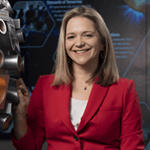
Andrea L. Kritcher, Ph.D. (Lawrence Livermore National Laboratory) - Fusion and Plasma Sciences -
Honored for her “exceptional design efforts leading to the first-ever achievement of fusion ignition in the laboratory, which is of major scientific impact to institutional and national missions, the private sector, and fusion interests within academia.”

Charles C. Polly, Ph.D. (Fermi National Accelerator Laboratory) - High Energy Physics -
Honored for his “exceptional scientific and technical contributions to low-energy precision measurements in particle physics, most notably leadership of the experimental measurement of the anomalous magnetic moment of the muon with the Muon g-2 experiment.”

Michael Reed, Ph.D. (Nevada National Security Site) - National Security and Nonproliferation -
Honored for his “vital contributions to national and international nuclear emergency response through the Advanced Visualization & Integration of Data (AVID) software, which broke existing paradigms by simultaneously fusing all radiological data into a single interface connected seamlessly to world-wide expertise.”

Lijuan Ruan, Ph.D. (Brookhaven National Laboratory) - Nuclear Physics -
Honored for her “outstanding leadership and ingenuity in the design, construction, and operation of novel detector systems in the STAR experiment, transforming dilepton final states into precision probes of heavy ion collisions.”
