




Transforming Material Topology with a Drop of Liquid
Liquid acts across multiple scales to reorganize connectivity in networks of artificial microscopic cells.
Official websites use .gov
A
.gov website belongs to an official government organization in the United States.
Secure .gov websites use HTTPS
A
lock (
) or https:// means you’ve safely connected to
the .gov website. Share sensitive information only on official,
secure websites.
Liquid acts across multiple scales to reorganize connectivity in networks of artificial microscopic cells.
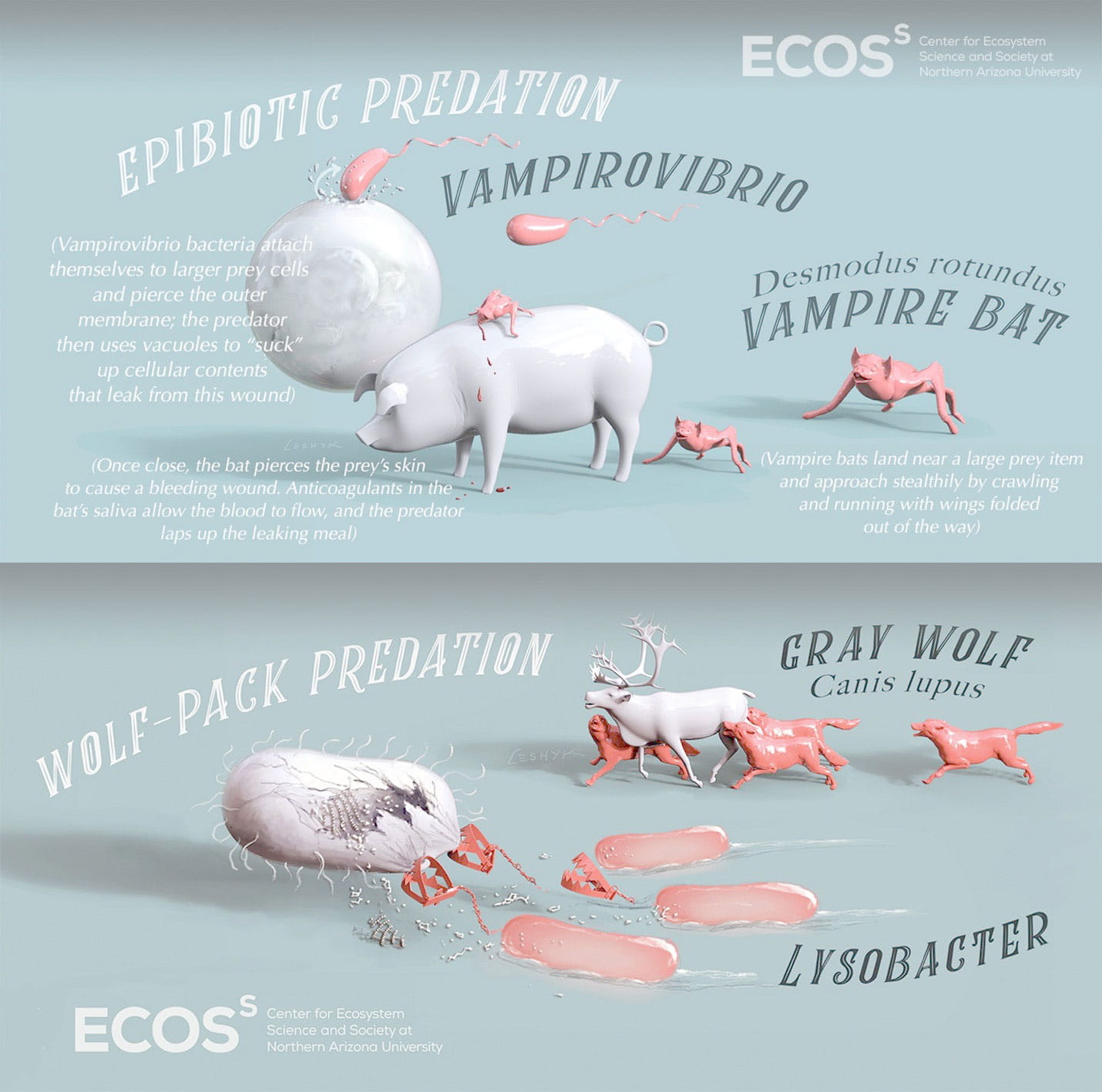
In natural soil, predatory bacteria grow faster than their prey.

Turbulent air in the atmosphere affects how cloud droplets form. New research changes the way scientists model clouds and, therefore, climate.

Scientists measure radioactive molecules at the extremes of physics.

Interactions of quantum “quasiparticles” demonstrate unusual fluid flow.

New concept would deliver continuous electricity while reducing cost and risk.

Microscopic features of neptunium dioxide control how contaminants dissolve in underground disposal of spent nuclear fuel.

Measurements and modeling demonstrate that perturbations to the magnetic field in a tokamak fusion plasma can suppress high-energy runaway electrons.

A unique coating camouflages the temperature of an underlying material

Nanotubes with designed defects allow better performance for next-generation optical telecommunications.

Measurements of nuclear charge radii and state-of-the-art nuclear models challenge the magic of neutron number 32 in potassium isotopes.

If physicists can find it, color transparency in protons could offer new insight into the particles that build our universe.
