




Researchers Obtain the First High-Precision Mass Measurement of Aluminum-22
The Facility for Rare Isotope Beams enables a high-precision mass measurement at the edge of the nuclear chart.
Official websites use .gov
A
.gov website belongs to an official government organization in the United States.
Secure .gov websites use HTTPS
A
lock (
) or https:// means you’ve safely connected to
the .gov website. Share sensitive information only on official,
secure websites.
The Facility for Rare Isotope Beams enables a high-precision mass measurement at the edge of the nuclear chart.

Study finds that neutral beam performance can be experimentally deduced from electron temperature evolution during neutral beam injection.

The first measurement of ion temperature in magnetic islands identified a steep gradient, providing insights for improving plasma confinement in tokamaks.
![A gas-phase X-Ray scattering experiment captures cyclopentadiene rapidly transforming into the strained bicyclo[2.1.0]pentene. This structure change is triggered by a pump pulse (blue) and detected through X-ray scattering (yellow).](/-/media/bes/csgb/images/highlights/2024/lcls_cover_jpcl_final_full.jpg?la=en&h=444&w=1000&hash=168CDD74CC5FD7690E3A0CD89E2F7B94)
Ultrafast X-ray experiments provide direct evidence that interaction of light with a hydrocarbon molecule produces strained molecular rings.

Nutrients related to vitamin B12 influence microbial growth and reshape soil microbiomes.

Emulating the edge of chaos of axons enables a metal wire to overcome its resistance without cooling, thereby amplifying signals flowing inside of it.

Scientists use gene editing to create a yellow-seeded camelina that may boost oil yield.
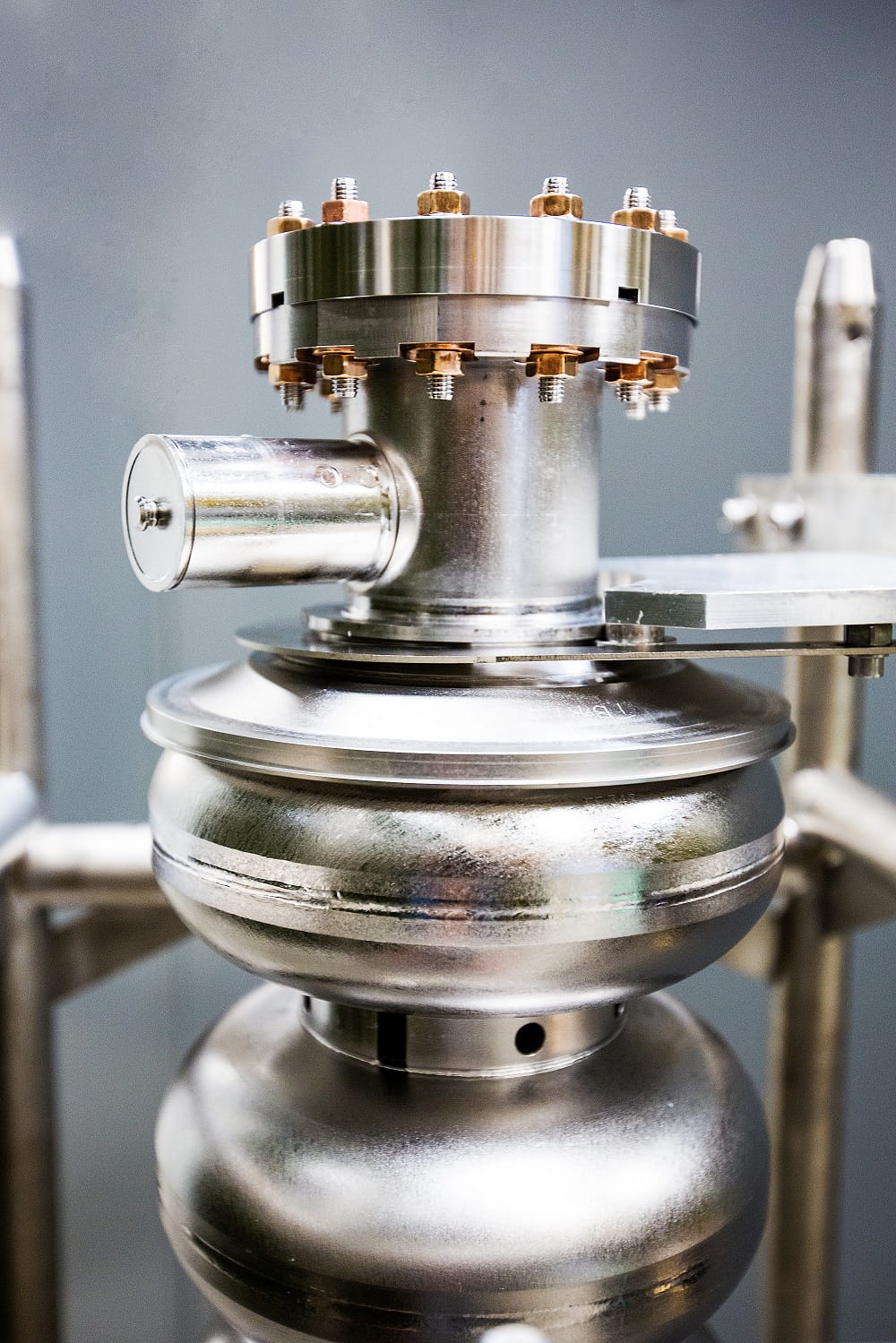
An enhanced topographic analysis toolkit for forecasting and improving particle accelerator performance is helping scientists build better accelerators.
An enhanced topographic analysis toolkit for forecasting and improving particle accelerator performance is helping scientists build better accelerators.

Solving quantum many-body problems with wavefunction matching.

Layers of a surface-conducting material, sandwiched between layers of a magnetic insulator, could lead to more powerful, energy-efficient electronics.

Researchers used neutrons to study porous metal materials called MOFs that trap toxic gases that are harmful to the environment and human health.
