




Improving How Models Predict Ocean Waves with AI
A new approach using machine learning can help computer models simulate waves more accurately in less time.
Official websites use .gov
A
.gov website belongs to an official government organization in the United States.
Secure .gov websites use HTTPS
A
lock (
) or https:// means you’ve safely connected to
the .gov website. Share sensitive information only on official,
secure websites.
A new approach using machine learning can help computer models simulate waves more accurately in less time.

A new technique reveals ultrafast processes in electrode-electrolyte interfaces under operating conditions.

A direct search shows that neutrinos are at least a million times lighter than electrons.

Scientists have developed a simulation of the merger of two neutron stars that includes the oscillation of different neutrino flavors into one another.

Advanced microscopy reveals motifs of trace atoms in semiconductors, paving the way for new microelectronics designed atom by atom.

Researchers propose a new approach to modeling adsorption processes that affect how pollutants move through soil, water, and rock.

Scientists have developed tiny nanocrystal particles made up of isotopes of the elements lanthanum, vanadium, and oxygen for use in treating cancer.
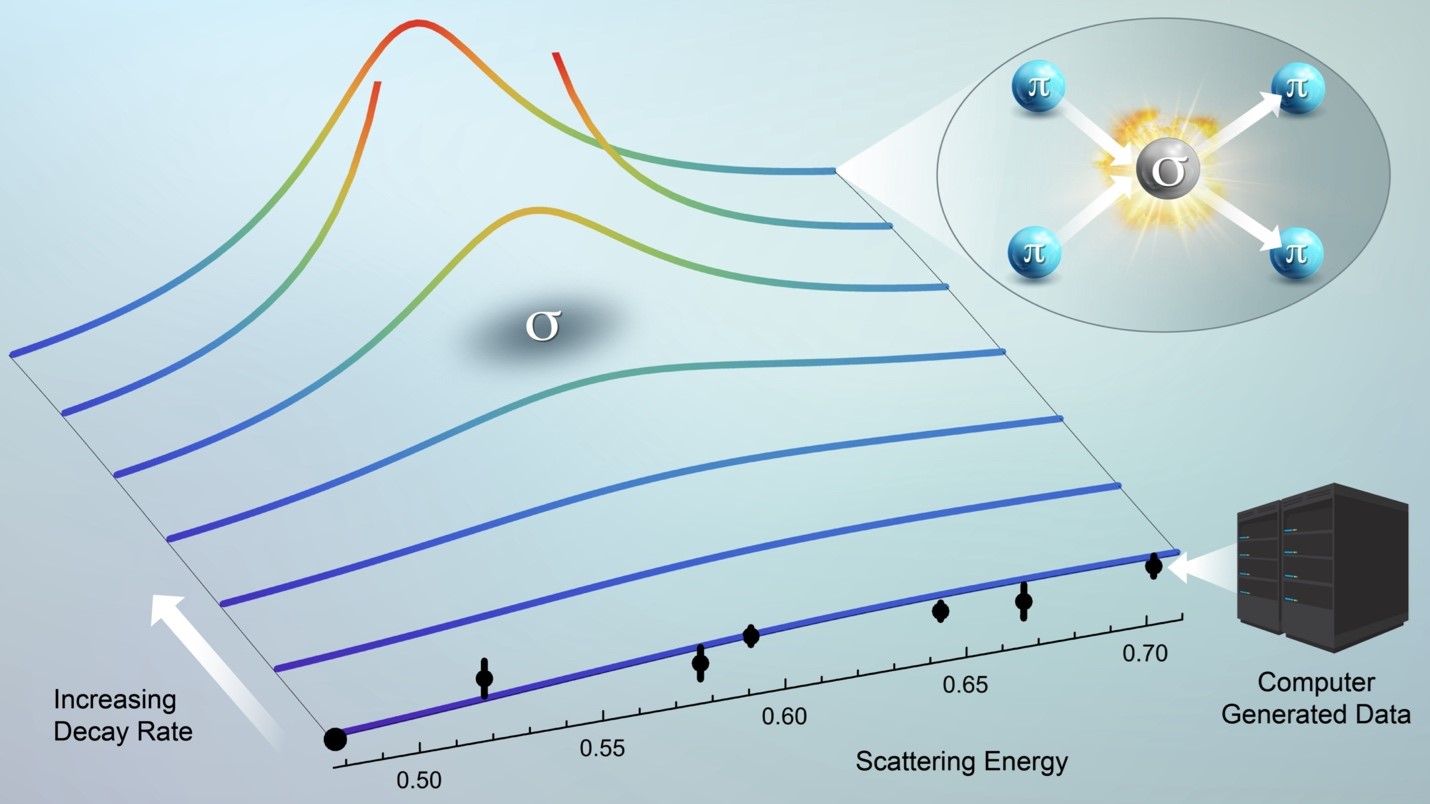
A Subatomic Challenge Resolved: Supercomputer Calculations Produce the First Accurate Theoretical View of the Sigma Meson

Electron transfer between atomically thin materials triggers the ultrafast release of heat.

Scientists chart a path to sub-femtosecond hard X-ray Free-Electron-Laser pulses powered by compact plasma-based accelerators.

Simulations of massive neutron star merger remnants reveal their structure and early evolution as they cool down by emitting neutrinos.

Research finds ab initio effective field theories are useful for calculating how nucleons scatter from collisions of atomic nuclei.
