




Moving Beyond Semiconductors for Next-Generation Electric Switches
Meticulously designed oxide thin films exhibit well-defined ON/OFF states that could be used in small, energy-efficient electronics.
Official websites use .gov
A
.gov website belongs to an official government organization in the United States.
Secure .gov websites use HTTPS
A
lock (
) or https:// means you’ve safely connected to
the .gov website. Share sensitive information only on official,
secure websites.
Meticulously designed oxide thin films exhibit well-defined ON/OFF states that could be used in small, energy-efficient electronics.

Predicting nanosystems with unanticipated properties can advance next-generation solar panels and electronics.

First-of-their-kind images could aid in use of DNA to build tiny, lightweight devices.

Researchers trapped and detected ensembles of electrons, an important step in isolating single electrons for use in a new generation of low-power supercomputing.

Disentanglement reveals exotic magnetic properties in a ytterbium-based compound.

Computer-designed molecular complex can be used in halogen-free electrolytes for batteries with superior performance.
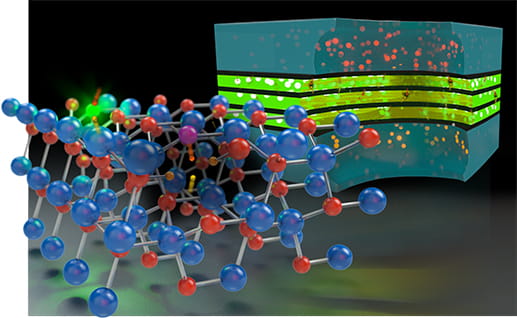
Scientists apprehended the atomic-scale, microscopic mechanism that limits light emission in LED lighting.

Better understanding could lead to more cost-effective production of cellulosic biofuels.

“Master regulator” gene will facilitate management and breeding of trees better adapted to changing environments.

Community composition is vital to managing native grasslands amid climate and precipitation variations.

Recycling waste from biofuel production could lower cost for future biorefineries.

Glaciers in cold, dry ecosystems respond differently to changes in climate than glaciers in warmer climates.
